Wild Thing . . . You Make My Heart Sing

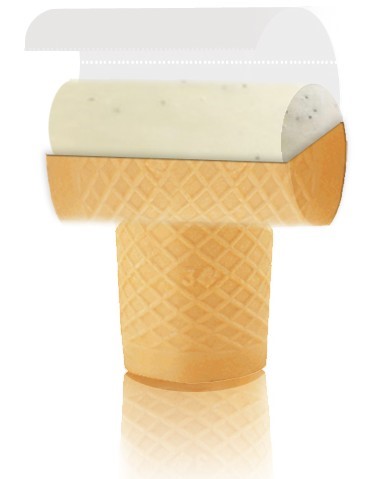
My friend, Jill, and I found out about the 17/18 Sign at Jones Beach as we were eating ice cream called Mello-Rolls. It was the ice cream of our youth but not without its hazards.
ice cream cone jb

You knew you weren’t a kid anymore when you could peel the paper away from the cylinder of ice cream without having it land in the sand. When you were young, this happened all the time. Then you cried. Then your dad trudged back to the concession stand to get you another one.

We were 16 now, and we wouldn’t think of being seen at the beach with our parents. And we never dropped our Mello-Rolls any more.

We were just back at our towels when a boy named B.J. Farley sauntered over and plopped himself down on the sand by Jill’s feet.

“So, I don’t think we’ve been introduced,” he said.

We were flattered because this kind of thing wasn’t happening much yet. We also laughed a little because we thought his opening line sounded like something Dean Martin would say.

“Where are you girls from? I know you’re not from Seaford or I would have seen you around.” Apparently, B.J. had an entire repertoire of lines the Rat Pack had tired of, and they were now public domain.

B.J. Farley was from the next town over. He was one of the St. William the Abbot boys we’d spied at Mass the week before. He called his church “St. Willie’s,” all at once adorable and blasphemous. We sat up straighter and listened intently. I concentrated on not dropping my Mello-Roll.

“Why are you all the way down here?” he said after a while. “Come on over and meet my friends at the 17/18 Sign.”

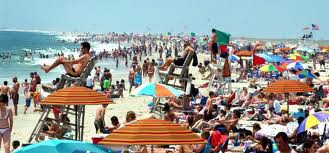
Jones Beach’s creators thought of everything. A theater, a band shell, a little golf course, paddle tennis. There were even numbered signs to help you negotiate the acres of white sand. The signs helped old people who might get lost looking for their umbrella. They helped little kids from getting separated from their parents. All good ideas. But now the 17/18 Sign gave us a geographical focus for making our summer memorable. To the self-absorbed teenage girls we were, that was much more important than dehydrated old people or lost children. So thank you to the sign inventor.
 

jones beach 3

We arrived at the 17/18 Sign like it was base camp for the last good-looking boys in the universe. We recognized many of the boys from Mass the week before. I’d had the good fortune to tag along as a non-Catholic girl. Apparently, I was just in it for the boys in blue blazers and madras ties because I remembered their faces vividly.

We stayed there all afternoon. The Seaford boys played a card game called Hearts and sang along to the radio. They jumped in the ocean when it got too hot, and they thwacked their towels at each other. In other words, they were exactly like boys their age from any town on Long Island. Just not to us. There was something exotic about this bunch of (mostly) Irish Catholic boys who lived two miles away and had been forced to take Latin in school.

“Are you going to the dance at St. Willie’s tonight?”

That was one of the Fitzpatrick brothers, the group that had stolen my heart simply by walking down the aisle at church the week before. It would take some sorting out of names to know which one was talking — John, Joe, Kevin, or Brian — since they all looked like the same boy, just an inch shorter or taller.

Jill and I leaped at our chance for summer romance. We promised ourselves that once we got back to school in September, we would pay attention to Massapequa boys again. We had this discussion on the bus going home. We were perfectly serious about it, too.

The Beach Boys were our moral barometer, and they had been telling us for years to “be true to your school.” And we would. In September. Until then a few summer dances in another town wouldn’t hurt. Had we been given the chance to let the Massapequa boys know our decision, their response would have probably been, “Who are you?” Jill and I were working on our brand back then, still operating pretty much in obscurity.

The Nun at the door said, “Welcome to St. William the Abbot School.” She was smiling, but it seemed forced.

I felt at any second she would ask me for my card that proved I was Catholic. Then she shot a glance at my skirt hem, and I realized what she really cared about. Her face relaxed a little. I knew I had passed her short-skirt criteria for not tempting boys into a life of sin.

The Nuns were doing their best as the dance progressed, but let’s face it. These were not The Sound of Music Nuns, just waiting it out until a rich Colonel came and scooped them up. They were sensible-shoed, wide-faced women of God. I think they were wishing they were back at the Convent House watching The Man from U.N.C.L.E. instead of being called on to supervise teenage lust.

Summer took on a sort of Lewis and Clark charm. By day we camped out at the 17/18 Sign, being charmed and doing our best to be charming. In the evenings, Jill and I walked around for miles, in the dark, in a sometimes complicated route — often barefoot because I thought my feet looked smaller that way. There was a lot of roaming involved.

My friends and I might get to the corner of Park Boulevard and Franklin Avenue after a half hour’s walk. And then as if we were in some sort of hormonal relay race, three girls we knew would give us the metaphorical hand off: “Gary Sullivan and Mark Doyle were just here and they were asking about you!” Heading off in that direction, we might or might not ever find them. And even if we found them, it didn’t mean we would necessarily talk to them.

Sometimes there was a final destination. It was called Hubies, a hamburger stand on Sunrise Highway. For reasons unknown, it attracted hordes of teenagers who swarmed the parking lot night after night. We acted like it was one giant coincidence that we all ended up standing under that neon. I don’t ever remember eating anything.

These summer nights got replayed a lot when I became the mother of teenagers myself many years later. I wondered how, in 1966, our parents ever trusted us to stand on the side of a 4-lane highway, flirting so vigorously that our heads were probably spinning, and then top it all off by walking home in the dark. They had no way of contacting us, which now seems unbearable. I wondered if they worried. That’s not true. I wondered how much.

Now my kids are parents themselves. I’m one generation removed from the nail-biting years. My memories of the summer at the 17/18 Sign and Hubies are all carefree now. And I remember the sweetest moments.

Like the evening someone turned up his car radio as “Wild Thing” was playing. We started dancing in the parking lot. Tommy Henshaw was my partner. He was wearing a Hawaiian shirt that was much too big for him, and he sang along as we danced.

Jill and I walked home. In the dark. Giggling and chatting. No cell phones. No Sacajewea. I was home by 10. And I was sure I’d be young forever.

I Learned One Thing at Summer Camp

There are decisions you make when you’re in a good mood. This was one of them.

At the end of a triumphant first year of teaching 5th grade, I accepted a friend’s offer to work at a summer camp in the Berkshires. My boyfriend, Jeff, (who would in a couple of years become my husband) took a job there, too.

We dreamed of wholesome fun in the rolling countryside of Connecticut. We thought of it as a summer “off.” Rustic log cabins, fresh mountain air. Trust falls, color wars, and camaraderie up the whazoo.

Hindsight arrived about two hours into the first day of the campers’ arrival. Kids were being unloaded from their parent’s station wagons and everything got ahead of me and my trusty clipboard. Returning campers were hugging each other and — I thought — wary of the new staff. It was noisy. It was crowded. There was running and jumping everywhere. And who knew the Berkshires sun could be so blazing at 9 in the morning?

I sensed immediately that I had a big problem. It was called camp.

Here’s the thing. I had never been to camp. I had never even been at a camp. I had never been in charge of 13-year-old girls. I didn’t know that 13-year-olds bear no resemblance to the 11-year-olds in my class back in upstate New York who spent a whole year thinking I was mildly cool. I didn’t know that everything in a camp is about half a mile away from the next thing in a camp. Trails were dusty. Instead of a cabin, I slept in a platform tent. There were mice.

Whoever built this camp had the foresight to put the girls and boys sections as geographically inconvenient to each other as humanly possible. This kept adolescent campers from the dangers of proximity after dark.

But it also meant that the only time I got to see Jeff was at meals. We’d look at each other from our respective tables, across a cavernous room made noisy by camp songs, the lyrics of which I didn’t know. I never caught on to the ten minutes or so of rhythmic table slamming and chants that sailed back and forth after dinner every night about who had spirit. Clearly, spirit was not in my repertoire.

camp-dining-hall-action

Our day off was consumed by hours at the Laundromat trying to get the campfire smell out of my clothes and cataloging the new names I was being called behind my back by the girls in my section. Jeff, on the other hand, was having the time of his life. He’d found that afternoons at the waterfront trying to upend canoes were much more fun than being a graduate student back at Syracuse University. He loved all of it. A week in, he announced he wanted to come back the next year.

So the problem wasn’t camp after all, I decided. It was me.

I bailed out of the job after the first 4-week session, and I’m not sure I ever apologized to my friend about that, so I will now because I know she’s reading this: I put you in a bad spot leaving the way I did. I’m sorry. I’m all for being out of my comfort zone once in a while, but after four weeks as a camp counselor, I was out of my mind.

My supervisor insisted on putting my evaluation in writing even as I was packing my things and sobbing out of embarrassment and shame for not seeing the summer through. Her comment at the bottom of the page remains one of the truest sentences ever written about me: “Linda’s personality is not in sync with the intensity of the camp experience.”

I went home to my parents’ house on Long Island for a week. I went right to bed and stayed there for a day or two. Then I ate grilled cheese and watched television until I felt better about myself.

I kept rethinking the opaque wording of the evaluation. I was 23 and thought I knew myself. Not fitting in at camp was a failure. At least until I got tired of grilled cheese and watching I Love Lucy reruns and felt like my old self again.

Then I regrouped and went back to teaching in September. To anyone who asked how my summer had been, I would force a little laugh and say, “Well, now I know I’m not cut out for the camp life.”

In all the years since, I’ve realized that camp was only the first indication that I am not cut out for large groups of anything. I am fine at cocktail parties, but they are work for me. Volunteering for field trips when my kids were in school was an act of pure love. I will never know the joy of Black Friday that some people get all breathless about.

I’m a person who needs down time, and the older I get the more I seem to thrive on it. I’m a person who opens my front door at the end of the day, takes a deep breath, and loves the idea that I don’t have to talk to another person until the morning. Being alone for part of Wednesday is what fuels me for Thursday.

Thanks to camp, I was able to make two life decisions. I knew at my core that I would never become a member of a cult. They usually have to eat in dining halls, too. And I believe there may be chanting involved. Maybe about spirit and who has more of it.

I also figured out that my personality wouldn’t be in sync with the prison experience. So I’ve always tried to make sure that’s not an option.

So no surprise that you’ll never find me searching the Internet for a group of tortured souls in Colorado who have found bliss by eating radishes for breakfast and worshiping Zeus. I’ll continue to stay on the sunny side of the law, too.

If anyone wonders why, it’s because of what I learned. At 23. At camp.

13 Things I Once Heard (And Believed)

1. “Girls shouldn’t do that.”

2. “The Dave Clark Five are better than the Beatles.”

Dave Clark Five

3. “A tiny bit can’t hurt.”

4. “You look terrific!”

haircut

5. “It’s not you. It’s me.”

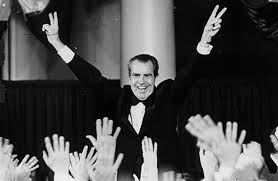
6. “Relax. Nobody’s gonna vote for Nixon.”

nixon

7. “If you breathe correctly, childbirth is not painful.”

8. “You’re the best mother in the whole world!”

9. “You’re the worst mother. Ever. Of all the mothers in the world.”

10. “I guarantee you’ll fall in love with running the way I have.”

running

11. “Buy it. It’ll make you happy.”

12. “You’ll get over it. Just give it time.”

13. “You look good in pink.” (This one actually turned out to be true.)

My Memorial Days

On the Memorial Days of my childhood, I’d walk three blocks to Broadway and stake out my spot in front of Sparky’s Barbershop, waiting for the parade to begin. The booming sound of the marching bands gave me butterflies. I envied the girls who could walk and catch their batons in the air at the same time. My dad taught us to stand each time the flag came by, not just the first one.

And then we’d go home and eat hamburgers and potato salad. Second only to Christmas, maybe, Memorial Day was right up there for me.

By the time I moved to Baltimore in my late 30s, the excitement reserved for holidays now belonged to my kids. Christmas was still big, of course, but they hadn’t been to many parades. And Memorial Day meant the weekend our community pool opened, an event for my children that overshadowed anything else.

Our house was near a cemetery, which I used as a geographic marker for anyone coming to visit: Go up the hill on Padonia Road. As soon as you begin to see the cemetery on the left, hang a right.

My first spring there, I was working in the garden when I thought I heard a Sousa march. It was coming from the cemetery’s direction. I had some time on my hands, I guess, because I followed the music across the street and walked through the gates. It wasn’t until I saw the wreaths and the politicians that I remembered it was Memorial Day.

I was a little ashamed of myself about that. I was the daughter and daughter-in-law of WWII veterans, men, who though they rarely spoke of it, had both served proudly in the Pacific. Back in Massapequa, I’d always been the first to get to Broadway, making sure I had my spot to watch the color guard and applaud the veterans who would wave from convertibles. I should have thought of Memorial Day as something more than an extra day in the garden.

I took a spot in the back where I wouldn’t be noticed. I watched the wreaths solemnly placed, and — with what I hoped was the right amount of decorum, despite the slightly dirty knees of my jeans — I waited until the bagpipers filed out.

That was my first Memorial Day in my new city. There would be lots more of them — I lived in that house a long time — but none would ever happen again the last weekend in May. I  went back to the cemetery often. And I never left without learning something.

I found the grave of a man who sang in my church choir. I watched him — in his blue robe — carry the bass section single-handedly. His life was filled with tremendous accomplishments, personal and professional. The plaque that documents his life chooses to tell the world he was a WWII veteran. I never knew.

Another man’s grave is adorned with a commemoration of Iwo Jima. He had lived a long life and died at a dignified age. Now here he was, wanting us to remember that part of his story. So on an ordinary Wednesday, with no Sousa march, no honor guard, I did.

There is a whole section for soldiers who died in Vietnam — all men my age — who would by now have grandchildren and be looking forward to retirement. I could always tell when their parents had been there. In spring they had carefully manicured the little lawns that bordered their sons’ graves. They rearranged the flowers. In winter, they left tiny Christmas wreaths and jolly miniature snowmen they stuck in the ground.

Being there reminded me that these were ordinary people called to do the extraordinary. I don’t know how they mustered up the courage to charge a hill or hold a line somewhere far from home when they missed their families and feared everything around the next corner.

I only knew that when I was there, I was in the presence of those who figured out a way. Men, who like my dad, said, “Remember, we stand up every time the flag goes by, not just the first one.” Or men like the ones at rest in the cemetery.

It’s true that  little girl from Massapequa who stood cheering for the parade didn’t understand the meaning of Memorial Day. But she tried to make up for it on all the other Memorial Days when she lived in the house near the cemetery. On the afternoons when she walked through those gates.

The Other Rules for Writers

All the sage wisdom that begins with “Write what you know,” and ends with “Show, don’t tell,” is there for the asking. Here are some other rules you probably haven’t found in any writer’s handbook. Perhaps one of them will unlock that bestseller that’s inside you somewhere.

1. Let your wall inspire you. Furnish the wall near your desk with meaning. Frame or tack up little things your eyes can drink in when you wonder why you thought writing seemed like a good idea in the first place. My wall sports, among many things, my favorite New Yorker cartoon of a penguin flying high above other penguins, saying, “We just haven’t been flapping them hard enough.” It also has a framed note from Anne Tyler, telling me sweetly why she couldn’t read and critique my manuscript I had sent her. I keep that note to remind myself to be that gracious if I ever win the Pulitzer, and as commentary on my boundless optimism that I really thought she would read my stuff in the first place.

2. Make a negative list. Create a list of all the people who doubt you as a writer. If anyone has said, “Many are called but few are chosen,” put that person at the top. Same with someone who has used the words “writing” and “starving” in the same sentence. Give your parents a little slack. (After all, their job is to worry, so don’t include them.) When you’re finished with the list, fold it carefully and tie it with a ribbon before you throw it away.

3. Make a positive list. Make a list of 12 living people in your life, present or past. Choose one each month and write him or her a letter. E-mails, texts, and cards don’t count. Make peace with your old college roommate; tell someone why you’ve always admired them; make the day of someone who wasn’t expecting to hear from you. Good writing is about relationships, so resurrect, enhance, create or feed some of yours.

4. Don’t throw anything away. Keep a notebook and take it everywhere. After writing becomes your way of life, you may find you dream in already constructed sentences that delight you. Write down phrases and sentences that come to you even though they may have nothing to do with what you’re writing at the moment. And then never throw away your notebook.

5. People watch. Got to a ballgame, even if you don’t like baseball. Sit on a park bench. Give blood. Have lunch alone in a restaurant and listen to the way people really talk. It will help you in writing dialogue more than any workshop ever will.

6. Start over every morning. Let your accomplishments excite you, but don’t let them placate you. Let your rejections teach you something, but don’t let them paralyze you. A writer’s life is like that of any other artist — a composer, a painter, a sculptor. There is nothing there until you sit at your desk and create it. You’re in charge, and there’s no one in the world who can string words together the way you do at that moment, on that day. Now go. Create.

The Lessons You Learn from a Chocolate Pancake

pancakeOur friendship with Miss Susannah began five years ago, early on a Sunday morning, when she leaned over our booth and said what she says to everyone in her section, “What can I get you folks?”

I was new to the game of taking grandsons to restaurants. Austin was three and Brendan one, and I figured we couldn’t do much damage at our local IHOP, already a little worn around the edges. I was relieved when Susannah said she was a grandmother, too. I figured if some sugar packets got mysteriously opened or if we left the syrup bottles drippy from overuse, she’d understand.

I used to think the appeal for the boys was the restaurant’s go-to item for kids ─ a chocolate pancake made into a smiley face by chocolate chips, whipped cream, and maraschino cherries (the kind of breakfast only a grandmother would let happen). It must look a lot better than it tastes, though, because halfway through, Austin and Brendan usually push their plates gently to the middle of the table and sigh, “Ugh . . . I’m full.”

Even if I give them some alternative breakfast restaurant ideas ─ lots of places have fancy pancakes ─ they won’t hear of it.

“Miss Susannah!” they say in unison, every time.

On the drive over, the boys usually wonder aloud if she’ll be there (she is always there). If it’s been more than a few weeks since our last visit, they predict she’ll be surprised (she isn’t but pretends to be).

“Maybe she was thinking we wouldn’t come back,” Austin says, “and then she’ll see us and she’ll be all, ‘Where have you guys been?’”

Susannah may be in the middle of yelling at the cook, or squinting at her order pad, or rushing to get someone’s coffee to the table, but everything stops when the boys walk in. She hugs and kisses them. We never have to ask to be seated in her section. It’s the only place in my life where I’ve ever been a regular. I’m the Norm of IHOP.

“So, how is school going?” she’ll ask. “What do you think about this rain? Are you going to take swim lessons at your pool this summer?” They do their best to keep her up to date, sensing that somehow it’s important to her.

They’re too young to notice her age, probably 70ish, or that her work day started before sunrise, or that her tips are never going to buy her a retirement condo in Boca. They just know that the second she sees them, everything stops. She beams. They beam back. And for five years they’ve come here. For her, not the pancakes.

I try not to get ahead of myself about what this all means. I did that too much as a mother, always a few years in the future, predicting what every little milestone was telling me. When you’re a grandmother, it’s easier to live in the moment. No guarantees as I listen to their adorable little  boy voices, that I’ll ever get to hear their grownup ones. No need, as I watch them eat their chocolate pancakes and scan the room for their favorite waitress, to tell myself what fine men they’ll turn out to be.

They are kind children. That’s enough for today.

As we are leaving this morning, Susannah says to a couple at the next table, “They’ve been coming here since they were babies.” They don’t hear her, but I do.

As we pull out of the parking lot, it’s quiet in the car.

“She was really smiley today,” Austin says.

Then they lean back, and for a while we ride in a delicious, sweet silence.

When Surf Was Up on Long Island

High school Study Hall. Is there such a thing anymore? I’m guessing no, but I feel too outmoded to ask anyone. The other day I was talking to my college-aged niece, who asked for advice on a paper she was writing. I suggested she look at the microfiche files in the library. Her head tilted. I could see by her baffled look I had — once again — forgotten what century we’re in. I’d rather not feel that way twice in one month.

So for those of you who may have missed it, Study Hall was a period built into your schedule when you were supposed to crack open those books and get to it. As far as I could ever see, it was split right down gender lines. For boys, it was a chance to put their heads down on the cafeteria table and close their eyes until the teacher patrolling the room poked their backs and said, “Sit up straight!” Girls were better at using the time wisely. We spent a solid 45 minutes passing notes. And again, for those of you who may have been born after Richard Nixon resigned, passing notes was texting with paper. Slower but with better spelling.

And if you don’t know who Nixon was, I can’t help you.

Brenda and I sat across from each other, experts at writing quickly, then folding the sheet of notebook paper into a tight white triangle. When the teacher was looking the other way, we flicked the note across the table. As I recall, there was always a lot of punctuation involved in our notes. And lots of P.S. messages at the bottom.

In Study Hall one afternoon, Brenda shot me the first note of the period, and it came with exciting news: “Richie Valenti asked me out!!!” We didn’t know much about Richie Valenti, but the sketchy facts we did have were exciting. He lived on the water in the section of Massapequa called Bar Harbor, where all the cool rich kids lived. And he was a surfer, hence three exclamation points. Hyperbole was required with surfers.

Richie Valenti had all of the surfer prerequisites, while most boys had two or three. He owned his own board. He had a wardrobe of madras and sandals. He was blond and he drove a Mustang convertible.

Looking back, I think the part about actually balancing on a giant piece of fiberglass in the ocean might have been optional. Maybe surfing on Long Island was the beginning of my generation being all full of ourselves and trying to educate our dowdy parents with a universal truth we had discovered: Appearance is everything.

Gilgo Beach Inn

Since I didn’t have boyfriends of my own back then, I made it my business to take Brenda’s very seriously. Lucky for me, Richie invited Brenda to Gilgo Beach often to watch him surf, but her mother insisted I go along, too, because there were bikinis involved, and it made her nervous. The ocean still made me a little nervous, too. As a teenager, I went back to barely attempted standing in the ocean beyond my ankles. I was fearful what I’d witnessed happen to Susie Patterson’s bikini top in the rough waves would happen to me, and then I would have to move to a different state.

This much I will say for Richie’s timing. It was impeccable. Every single time, just as we arrived, he would manage to be wet and running out of the surf. He’d stick his board in the sand, slightly out of breath as if he’d just finished conquering the Bonzai Pipeline. Then he’d take a long time to shake the salt water out of his long blond hair. For the entire summer, we never actually saw him do more than that. But our adoration never faltered.

I’ve always hoped he found his way into advertising.

What I Learned About Love, at 12

On Saturday mornings in 1962, my mother would take the car keys off the hook by the front door, jiggle them a little and call out, “Who’s coming?” even though she knew the answer was only me. My brothers’ standing excuse — Quick Draw McGraw was about to start — didn’t seem like enough, but it always worked for them.

The nursing home we drove to was attached to Brunswick Hospital, where my mother had worked as a younger woman, the reason, I guess, that Aunt Bertha ended up out here, on Long Island. Bertha had never married, never had children of course, and had outlived everyone who might have more than a passing interest in her, except for my mother.

As a girl, my mother spent two weeks each August at her great-aunt’s third story walk-up on the Lower East Side of Manhattan. Aunt Bertha would take her annual vacation from being a secretary and treat my mother to some intense attention — devotion she might have directed toward her own daughter if she’d had one — all lovingly distilled into fourteen days once a year.

My mother would talk about those vacations sometimes on the way over to visit Bertha. The tone of her voice seemed oddly pleasant to me, since the visits included sweltering nights, having her hair braided several times a day, and choking down liver and onions for dinner. It didn’t sound like much of a vacation, but my mother said that from the time she was a little girl, she realized how much her aunt adored her. And at 12, I knew that being adored counted for a lot.

In 1962, Bertha sometimes took a few minutes to recognize us when we suddenly appeared at her door, and because she was easily startled, we always began our visits in the lowest gear we could manage. We moved in slow motion so we wouldn’t make her flinch. We spoke softly even though she was pretty much deaf.

“It’s me, Jeannie,” my mother would say. Sometimes that worked and sometimes it didn’t.

My mother performed the same duties each week. She’d reach for the lotion and squirt it between her palms to warm it, and then rub her aunt’s mottled hands, carefully maneuvering around her swollen knuckles. Even on days she didn’t know who my mother was, Bertha would let her confusion go with the first warm strokes on her fingers and just sit back in her wheelchair and enjoy it.

She used a baby’s comb on her aunt’s hair, so thin that a brush would have scratched her scalp. She took tiny scissors out of the drawer and snipped her chin hairs. She set Bertha’s false teeth in a glass of white fizzing liquid that was supposed to transform them from their putty yellow color. We’d wait for five minutes, watching the bubbles. Without teeth, Aunt Bertha’s whole jaw caved in. She wouldn’t talk again until my mother had rinsed the uppers and lowers in the bathroom sink and popped them back in.

Trying to give our visit the arc it often needed, my mother would say, “There, that’s better, isn’t it?”

Then she would take inventory of the metal bedside table to make sure everything was there, items essential to this life – as opposed to Bertha’s jewelry and mink collar circa 1930, safely stored at our house and waiting for her in case she miraculously got young again, I guessed.

We’d push her wheelchair to the Great Room after that. I held my breath down that hall because the floor-to-ceiling tiles smelled of strong disinfectant. My mother said whatever it was, it probably warded off staph infection or something equally deadly in old people. I silently vowed never to be old.

In the Great Room, people’s wheelchairs formed a circle of faux camaraderie. Some people nodded off and snored, others had visitors, and the only man in the whole place sat in the corner and chain smoked all day. Other kids were a rarity, so I can say — without swagger — that I was always in demand in the Great Room. Women awoke as if from a dream to reach out to me.

Sometimes Aunt Bertha would say to me, “I have something for you!” The first time she did it — her eyes all wide and expectant — I thought maybe it was something like a diamond ring or a fistful of hundred-dollar bills. She pulled the gift out from under her left thigh, wrapped in a dozen of the nursing home’s cheap one-ply napkins. Her body heat had made it warm. It was a roll she’d taken from breakfast. Maybe that day, maybe another. I would thank her and on our way out of the building it would hit with a thud in the trash can. Again, I’d make my vow.

One morning, just as we’d delivered Aunt Bertha back to her room and had our coats on to leave, she looked up and asked, “Where is Mr. Raffensberger?”

It was an insistent tone, like he was supposed to be in the room and she was demanding to know where we were hiding him. I’d never heard her speak in anything louder than a raspy whisper. “Where is he?”

My mother acted like she hadn’t heard the question.

“Let’s see . . . where in the world did I put my car keys?”

We were halfway home when I got up the nerve to ask. She never took her eyes off the road. She sighed a little, deciding how much of an answer to give me.

“Mr. Raffensberger was her boss. They were in love. He died about twenty years ago.”

“Why didn’t they get married?”

She sighed again, bigger this time.

“He was already married.”

When I was 12, I wanted to know everything there was to know about love, and I didn’t know anything yet. Aunt Bertha’s story became an unfinished chapter in my studies. So, she hadn’t always been old and crusty as I’d suspected. She’d been young once and in love, and for the whole ride home I sat in a confused silence trying to take it all in.

My mother, sensing she had said too much maybe, didn’t speak of it again. So the rest I had to make up on my own, something I was pretty good at back then.

Even years after her death, the scene went like this. Aunt Bertha cooking dinner in her sparse kitchen, waiting to hear him bounding up the steps. He had a big mustache on a plain, round face. He was a little balding, even in his thirties. He used a cotton handkerchief to mop his brow and couldn’t help talking about the humidity in August by the time he got to the third floor.

When she finished washing the dishes, he said, “You need to take care of these lovely hands, Bertha.” Then he rubbed them in his, with lotion he took down from the shelf above the sink. She relaxed in the touch.

To the New Mothers From an Old One

My father and his mother, the year she died

In 1978, when I was about to give birth for the first time, my mother-in-law and my mother were full of information I would never need. Motherhood had changed since their day, when babies were on strict schedules and parents believed that letting them “cry it out” was in everyone’s best interest.

We were the New Mothers, and we were reinventing the parenthood wheel. We had everything figured out by reading books, Lamaze breathing our way through labor, breastfeeding on demand, and raising children who might never know a critical word but would always have a room full of soccer trophies to call their own.

I know. I know. It’s a new day, and by now everyone knows that my generation didn’t make fewer mistakes than our mothers had —just different ones. Everything is again different when it comes to babies, and I wouldn’t dream of getting into a discussion about baby sign language or sleep training, because I’m just that far behind in baby trends.

But maybe there are a few things that never changed and never will. So because I can’t see any patent disinterest in your faces as you read this, here you go, New Mothers — truths from an Old Mother.

* You will be holding your newborn, maybe even your first day home, and you will have a flashback of yourself as a teenager. You’ll hear the exact vile words you uttered to your parents, and see yourself as you stomped out of a room, amazed by how truly stupid they were. When that memory comes to you, you’ll wish you could go back in time and smack yourself in your fourteen-year-old head.

* When you find yourself tacking a sign to the front door for the UPS delivery person: “Do NOT ring bell! Baby sleeping!!” you will recall all those conversations you had with friends that started with your saying: “Our lives won’t change after the baby.” You might wish you hadn’t been quite so specific about your plans to backpack through Colorado with your infant strapped to your chest.

* You will glance down at your beloved cat or dog, the one you bought Halloween costumes for and gave a pseudo baby name. Suddenly it occurs to you that it can’t talk. And it eats off the floor.

* Your baby will roll over or sit up for the first time, and you’ll say out loud, “That’s really early to do that, right?” You’ll search the Baby World Records Book to see if he is a contender. You will throw around the word “genius” more than once, even if it’s just in your head. The first Kindergarten parent/teacher conference might rein this in for you. (Okay, it did for me.)

* The word “poop” will grace nine out of ten conversations and you’ll wonder why you didn’t talk about poop more often before this. That’s how fascinating it’s now become. I am not kidding.

* Under oath, you will declare that you cannot possibly love a second (or third or fourth) baby the way you do your first. Then someone will place that new baby into your trembling arms, and you’ll realize that love can be divided in two without changing one molecule. It’s non-mathematical. It’s magical. And it will come over you that very first second.

* In the middle of the night with a screaming infant, you will long for that pregnancy heartburn you believed was the worst thing ever. And here’s a little sneak peek into the future: When your baby is seventeen and out somewhere driving with her friends, you’ll long for the nights she was in her crib, even if she was wailing away. In other words, there is always something coming.

* For the rest of your life, when you read a story about a person who has done something horrible — something despicable and beyond forgiveness — you will think, although maybe not right away, “That is someone’s child.” You will know at your core just what that sentence means.

* Some days will seem many miles long. But the culmination of them will whiz by while you’re looking the other way. Try to laugh as much as you can. It’s one of the few sounds your child will remember for an entire lifetime.

* You will ask, and you will ask this a lot: What did I do before this? How did I love before this? Why didn’t someone tell me?

You just couldn’t hear them until now. Welcome to motherhood.